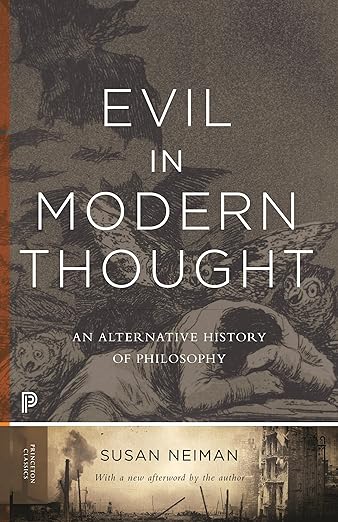
Evil in Modern Thought: An Alternative History of Philosophy
Est. 7h 17m
267 Pages
235 reading now
Prologue
Evil threatens reason. It challenges our hope that things make sense. For 18th-century Europeans, the Lisbon earthquake was manifest evil. Now we view evil as a matter of human cruelty, Auschwitz as its extreme incarnation.Examining our understanding of evil from the Inquisition to contemporary terrorism, Neiman explores who we've become in the three centuries since the early Enlightenment. In the process, she rewrites the history of modern thought and points philosophy back to the questions that originally animated it. Whether expressed in theological or secular terms, evil poses a problem about the world's intelligibility. It confronts philosophy with fundamental questions: Can there be meaning in a world where innocents suffer? Can belief in divine power or progress survive a cataloging of evil? Is evil profound or banal?Neiman argues that these questions impelled modern philosophy. Traditional philosophers from Leibniz to Hegel sought to defend the Creator of a world containing evil. Inevitably, their efforts--combined with those of more literary figures like Pope, Voltaire and the Marquis de Sade--eroded belief in God's benevolence, power & relevance, until Nietzsche claimed He'd been murdered. They also yielded the distinction between natural and moral evil that we now take for granted. Neiman turns to consider philosophy's response to the Holocaust as a final moral evil, concluding that two basic stances run through modern thought. One, from Rousseau to Arendt, insists that morality demands we make evil intelligible. The other, from Voltaire to Adorno, insists that morality demands that we don't.Beautifully written and thoroughly engaging, this book tells the history of modern philosophy as an attempt to come to terms with evil. It reintroduces philosophy to anyone interested in questions of life and death, good and evil, suffering and sense.