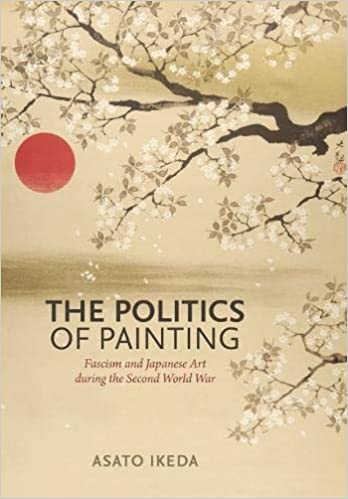
The Politics of Painting: Fascism and Japanese Art during the Second World War
Est. 5h 59m
273 Pages
231 reading now
Prologue
This book examines a set of paintings produced in Japan during the 1930s and early 1940s that have received little scholarly attention. Asato Ikeda views the work of four prominent artists of the time--Yokoyama Taikan, Yasuda Yukihiko, Uemura Shōen, and Fujita Tsuguharu--through the lens of fascism, showing how their seemingly straightforward paintings of Mount Fuji, samurai, beautiful women, and the countryside supported the war by reinforcing a state ideology that justified violence in the name of the country's cultural authenticity. She highlights the politics of "apolitical" art and challenges the postwar labeling of battle paintings--those depicting scenes of war and combat--as uniquely problematic.Yokoyama Taikan produced countless paintings of Mount Fuji as the embodiment of Japan's "national body" and spirituality, in contrast to the modern West's individualism and materialism. Yasuda Yukihiko located Japan in the Minamoto warriors of the medieval period, depicting them in the yamato-e style, which is defined as classically Japanese. Uemura Shōen sought to paint the quintessential Japanese woman, drawing on the Edo-period bijin-ga (beautiful women) genre while alluding to noh aesthetics and wartime gender expectations. For his subjects, Fujita Tsuguharu looked to the rural snow country, where, it was believed, authentic Japanese traditions could still be found. Although these artists employed different styles and favored different subjects, each maintained close ties with the state and presented what he considered to be the most representative and authentic portrayal of Japan.Throughout Ikeda takes into account the changing relationships between visual iconography/artistic style and its significance by carefully situating artworks within their specific historical and cultural moments. She reveals the global dimensions of wartime nationalist Japanese art and opens up the possibility of dialogue with scholarship on art produced in other countries around the same time, particularly Nazi Germany and Fascist Italy.The Politics of Painting will be welcomed by those interested in modern Japanese art and visual culture, and war art and fascism. Its analysis of painters and painting within larger currents in intellectual history will attract scholars of modern Japanese and East Asian studies.