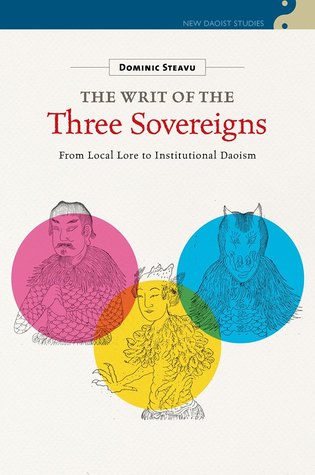
The Writ of the Three Sovereigns: From Local Lore to Institutional Daoism (New Daoist Studies)
Est. 9h 18m
413 Pages
241 reading now
Prologue
In 648 CE, Tang imperial authorities collected every copy of the Writ of the Three Sovereigns (Sanhuang wen) from the four corners of the empire and burned them. The formidable talismans at its core were said not only to extend their owners' lifespan and protect against misfortune, but also propel them to stratospheric heights of power, elevating them to the rank of high minister or even emperor. Only two or three centuries earlier, this controversial text was unknown in most of China with the exception of Jiangnan in the south, where it was regarded as essential local lore. In the span of a few generations, the Writ of the Three Sovereigns would become the cornerstone of one of the three basic corpora of the Daoist Canon, a pillar of Daoism--and a perceived threat to the state.This study, the only book-length treatment of the Writ of the Three Sovereigns in any language, traces the text's transition from local tradition to empire-wide institutional religion. The volume begins by painting the social and historical backdrop against which the scripture emerged in early fourth-century Jiangnan before turning to its textual history. It reflects on the work's centerpiece artifacts, the potent talismans in celestial script, as well as other elements of its heritage, namely alchemical elixirs and "true form" diagrams. During the fifth and sixth centuries, with Daoism coalescing into a formal organized religion, the Writ of the Three Sovereigns took on a symbolic role as a liturgical token of initiation while retaining its straightforward language of sovereignty and strong political overtones, which eventually led to its prohibition. The writ endured, however, and later experienced a revival as its influence spread as far as Japan.Despite its central role in the development of institutional Daoism, the Writ of the Three Sovereigns has remained an understudied topic in Chinese history. Its fragmentary textual record combined with the esoteric nature of its content have shrouded it in speculation. This volume provides a lucid reconstruction of the text's hidden history and enigmatic practices while shedding light on its contributions to the religious landscape of medieval China.