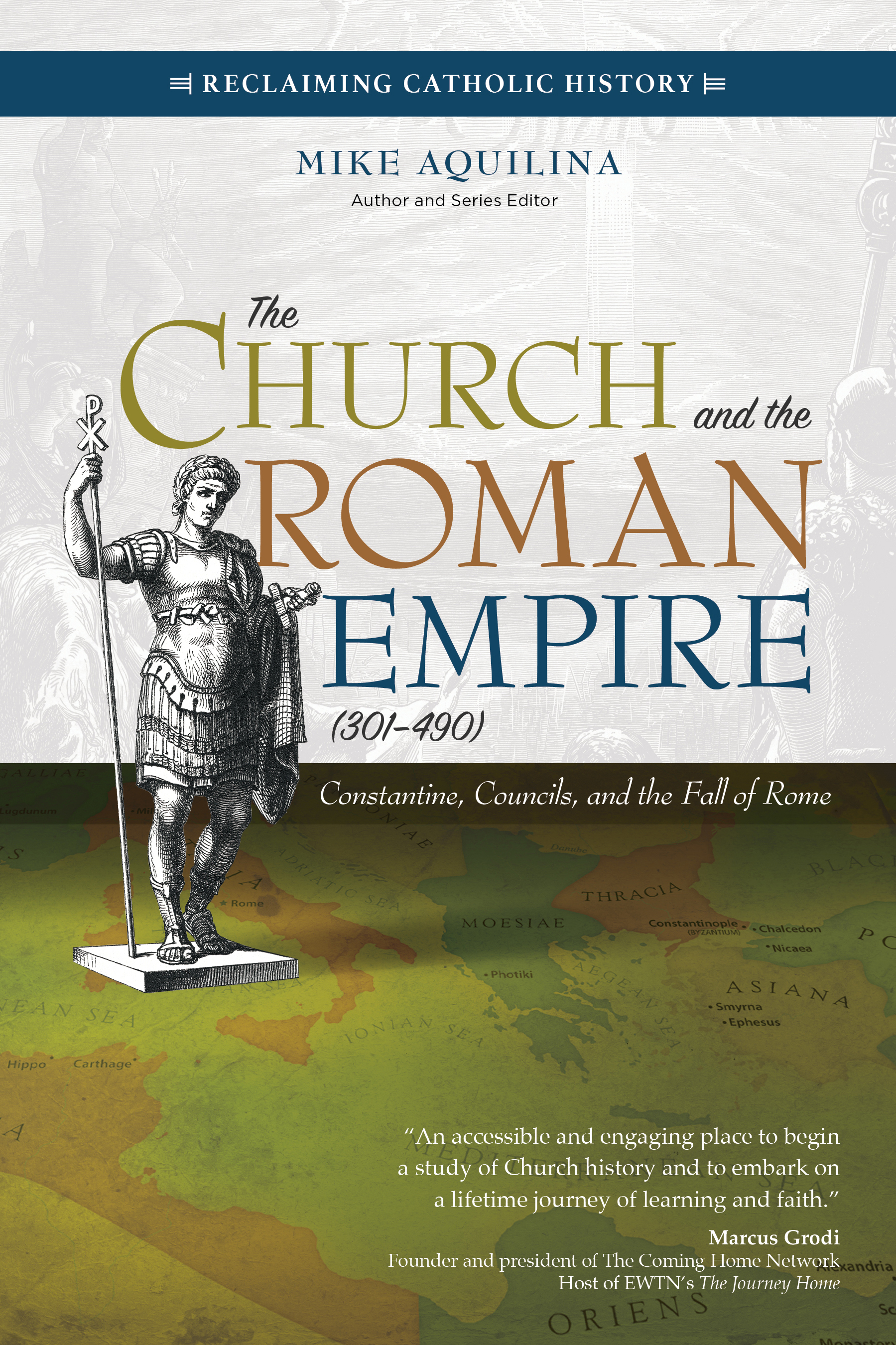
The Church and the Roman Empire (301–490): Constantine, Councils, and the Fall of Rome (Reclaiming Catholic History)
Est. 4h 58m
313 Pages
274 reading now
Prologue
Suspense, politics, sin, death, sex, and redemption: Not the plot of the latest crime novel, but elements of the true history of the Catholic Church.Larger-than-life saints such as Athanasius of Alexandria, Jerome, Augustine, and political figures such as Emperor Constantine played an important part in the history of the Christianity. In The Church and the Roman Empire (301–490): Constantine, Councils, and the Fall of Rome, popular Catholic author Mike Aquilina gives readers a vivid and engaging account of how Christianity developed and expanded as the Roman Empire declined.In The Church and the Roman Empire (301–490), Mike Aquilina explores the dramatic backstory of the Council of Nicaea and why Christian unity and belief are still expressed by the Nicene Creed. He also sets the record straight about commonly held misconceptions about the Catholic Church. Readers may be surprised to learn:The Edict of Milan didn’t just legalize Christianity; it also established religious tolerance for all faiths for the first time in history.The growth of Christianity inspired a more merciful society: Crucifixion was abolished; the practice of throwing prisoners to wild beasts for entertainment was outlawed; and slave owners were punished for killing their slaves.Controversy between Arians and Catholics may have resulted in building more hospitals and other networks of charitable assistance to the poor.When Rome fell, not many people at the time noticed.Aquilina brings Church history to life in The Church and the Roman Empire, enabling Catholics to more deeply consider the true origins of the creed that unites us, the Bible we read, and the liturgy we celebrate.