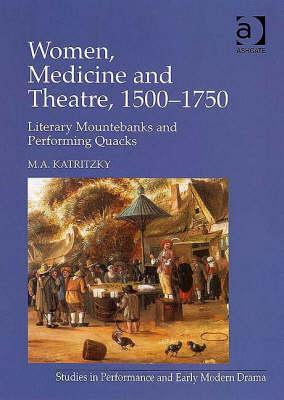
Women, Medicine and Theatre, 1500-1750: Literary mountebanks and performing quacks (Studies in Performance and Early Modern Drama)
Est. 5h 25m
423 Pages
395 reading now
Prologue
Well illustrated, accessibly presented, and drawing on a comprehensive range of historical documents, including British, German and other European images, and literary as well as non-literary texts (many previously unconsidered in this context), this study offers the first interdisciplinary gendered assessment of early modern performing itinerant healers (mountebanks, charlatans and quacksalvers). As Katritzky shows, quacks, male or female, combined, in widely varying proportions, three elements: the medical, the itinerant and the theatrical. Above all, they were performers. They used theatricality, in its widest possible sense, to attract customers and to promote and advertise their pharmaceuticals and health care services. Katritzky investigates here the performative aspects of quack marketing and healing methods, and their profound links with the rise of Europe's professional actresses, fields of enquiry which are only now beginning to attract significant attention from historians of medicine, economics or the theatre. Women, Medicine and Theatre also recovers women's roles in the economy of the itinerant quack stage. Women associated with mountebank troupes were medically and theatrically active at every level from major stage celebrities to humble urine sample collectors, but also included sedentary relatives, non-performing assistants, door- and bookkeepers, wardrobe mistresses, prop and costume loaners, landladies, spectators, patrons and clients. Katritzky's study of the whole range of women who supported the troupes contextualizes the activities of their male counterparts, and rehabilitates a broad spectrum of diversely occupied women. The strength of this title's research method lies in its comparative examination of documents that are generally examined from the point of view of either their performative or their medical aspects, by historians of, respectively, the theatre and medicine. Taken as a whole, these handbills, literary descriptions a